
If you’ve never taken a child to a chiropractor before, the process of finding the right one can feel a little like trying to evaluate something you don’t fully understand yet. You can read reviews, check credentials, and look at websites. But when you don’t know what great pediatric chiropractic care actually looks like from the inside, it’s hard to know what you’re evaluating for.
Most parents who find their way to Howell Chiropractic didn’t go through an extensive search process. They got a recommendation from another parent, or they found Dr. Travis through a Google search at 10pm when their kid had been struggling for months and they were finally ready to try something different. But once they were in the door and experienced the process firsthand, they had a much clearer picture of what they’d been looking for without knowing it.
This blog is that picture. What great pediatric chiropractic care looks like, what questions are worth asking, what the experience should feel like for both you and your child, and what to pay attention to when you’re trying to decide whether you’ve found the right fit.
It Starts Before Your Child Ever Walks In
One of the clearest signals of a pediatric chiropractic practice that takes families seriously is what happens before the first appointment.
A practice that’s built for kids understands that a lot of children, especially anxious kids, sensory-sensitive kids, and neurodivergent kids, need preparation before they walk into an unfamiliar space with an unfamiliar person who is going to touch their spine. The way a practice handles that reality before day one says a lot about how they’ll handle everything that follows.
What this looks like in practice:
- A complimentary consultation, ideally virtual, where the parent can walk through the child’s full history, ask every question they have, and get a clear picture of what care would look like before committing to anything
- Accessible resources, like a virtual office tour or photos on the Google Business page, so a parent can introduce the space to their child before they ever arrive
- A team that responds to questions promptly and makes it easy to reach out before booking
- Clear communication about what the first appointment will involve, how long it will take, and what the child will experience
None of this is complicated, but not every practice does it. When a practice makes the pre-visit experience easy and thoughtful, it’s a strong signal that the in-office experience will be the same.
The Intake Process Should Feel Like a Real Conversation
Pediatric chiropractic care that actually works starts with actually understanding the child. That means the intake process needs to go deeper than a standard health history form.
A good pediatric chiropractor wants to know about the birth story, because that’s often where nervous system patterns begin. They want to know about the full symptom picture, not just the chief complaint the parent led with, because kids rarely present with one isolated issue. They want to understand the child’s sensory profile, their anxiety level around new people and places, what makes them comfortable, and what tends to set them off.
They’re building a picture of the whole child, not just the spine.
At Howell Chiropractic, the virtual consultation covers all of this before the first in-person visit. By the time a child walks through the door, Dr. Travis already knows their history, understands what the parents are hoping to address, and has a clear sense of how to approach the first appointment in a way that works for that specific kid. That preparation shows up in the quality of the care from day one.
Insider Tip from Dr. Travis: “The first thing I’m doing when a new pediatric patient comes in is figuring out what they need to feel safe. For some kids that means we spend the first visit just getting comfortable in the space before we do anything else. For others it means doing the whole thing while they’re in their parent’s lap. The adjustment can wait. The relationship can’t.”
The Evaluation Should Be Objective, Not Just Observational
One of the things that separates nervous system based chiropractic care from a more traditional approach is the use of objective assessment tools that give a measurable picture of how the nervous system is functioning, rather than relying solely on symptom reports and physical observation.
At Howell Chiropractic, every new patient, including children, receives Insight CLA nervous system scans as part of their initial evaluation. These scans are completely non-invasive, involve no radiation, and feel like nothing more than a sensor being gently moved along the spine. For kids who are anxious about anything medical, this tends to be a genuine relief.
What the scans measure:
- Surface electromyography (sEMG): Measures the electrical activity in the muscles along the spine, which reflects how much tension and stress the nervous system is carrying
- Thermal scanning: Measures temperature differences along the spine, which indicate how well the autonomic nervous system is regulating blood flow to the organs and tissues
- Heart rate variability (HRV): Measures the nervous system’s ability to adapt and respond to stress, which is one of the most reliable indicators of overall nervous system health
Together, these scans give Dr. Travis an objective baseline for where the child’s nervous system is right now. They remove the guesswork from the evaluation and make it possible to track real progress over time rather than relying solely on whether the parent feels like things are getting better.
This matters for families who want to understand what’s actually happening, not just take someone’s word for it. The scans are also genuinely useful for kids who can’t always articulate how they’re feeling, because the data tells a story the child might not be able to put into words.
The Adjustments Should Match the Child
This is the piece that surprises most parents who have experienced adult chiropractic care and are bracing for something similar with their kid.
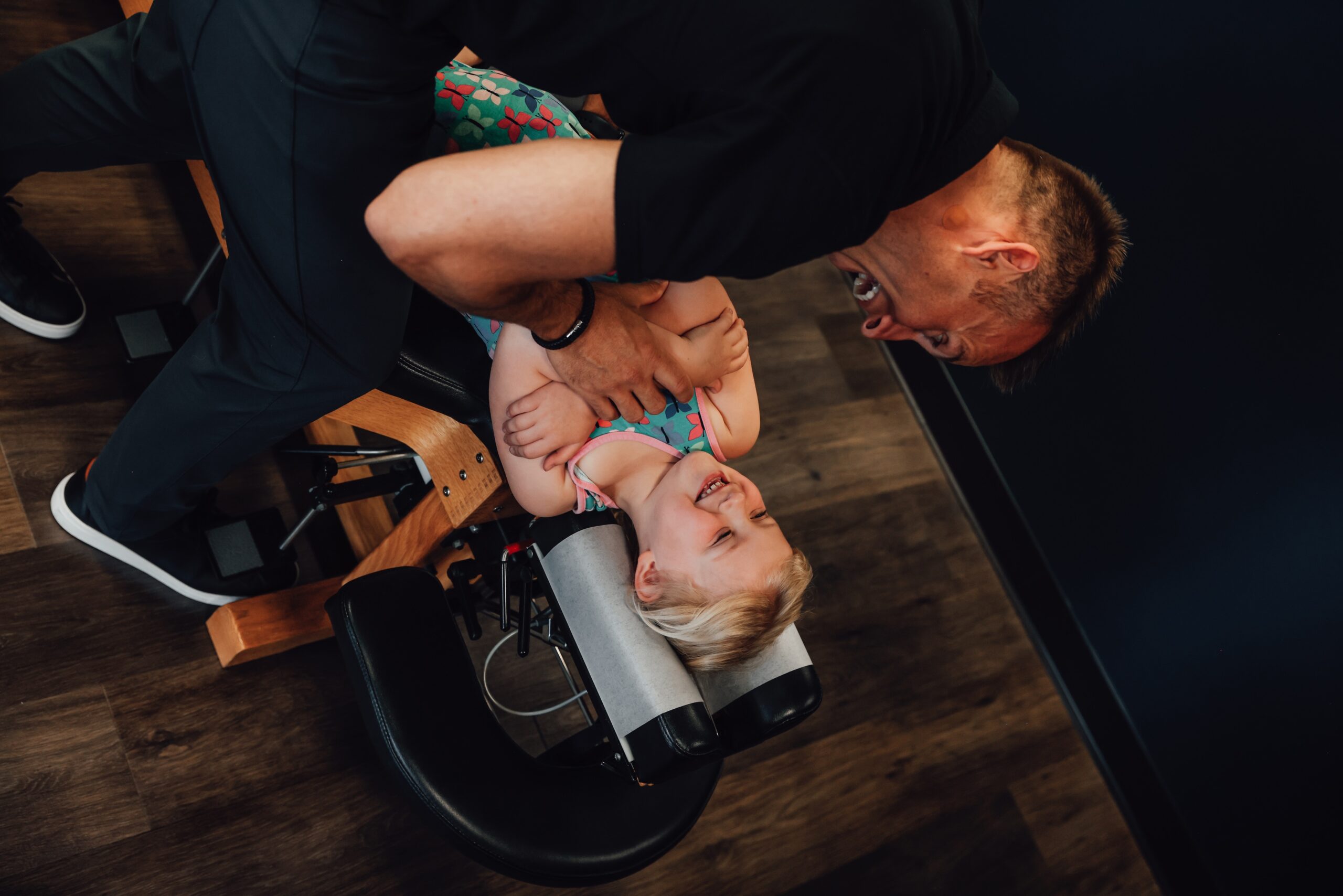
Pediatric chiropractic adjustments are nothing like adult adjustments. The force used is dramatically less, the techniques are completely different, and the whole approach is adapted to the size, development, and comfort level of the child in front of the provider.
For infants, the pressure used during an adjustment is comparable to the pressure you’d use to test the ripeness of a piece of fruit. Literally fingertip pressure, applied with precision to specific areas of the spine. There’s no cracking, no popping, no sudden movement.
For toddlers and young children, the techniques remain gentle and are delivered in whatever position the child is most comfortable in. Some kids do best lying on the table. Others do better sitting up, or being held by a parent, or standing. A good pediatric chiropractor adapts to the child rather than expecting the child to adapt to the process.
For older kids and teenagers, the techniques scale with size and development, but they remain gentler than what an adult would receive. The goal is always the same: specific, precise input to the nervous system with the minimum force necessary to produce the desired response.
What you should see during your child’s adjustment:
- Your child remaining calm and comfortable throughout
- The provider explaining what they’re doing in age-appropriate terms
- Techniques that look gentle enough that you’re not wincing watching them
- A child who, after a few visits, walks in without resistance and leaves without complaint
If any of those things aren’t true, it’s worth asking questions.
The Office Environment Tells You a Lot
A practice that genuinely serves families looks and feels different from one that primarily serves adults and occasionally sees kids.
The physical environment matters more than most people realize, especially for sensory-sensitive kids. An overstimulating waiting room, harsh lighting, loud music, strong smells, or a chaotic front desk experience can set a sensitive child’s nervous system into overdrive before they’ve even had their appointment. A practice built for families is thoughtful about all of this.
Beyond the physical space, pay attention to how the staff interacts with your child. Are they comfortable with kids? Do they get down to the child’s level? Do they speak to the child directly rather than talking over them to the parent? Does the provider take time to connect with your child before jumping into the clinical part of the visit?
At Howell Chiropractic, the office is built around the reality that most patients are families, which means kids are present constantly. The environment reflects that. It’s calm, it’s welcoming, and the entire team is practiced at putting both children and their parents at ease from the moment they walk in.
Progress Should Be Trackable and Communicated Clearly
Great pediatric chiropractic care doesn’t just deliver adjustments and hope for the best. It monitors progress systematically and communicates findings clearly to the family throughout the process.
At Howell Chiropractic, progress evaluations happen roughly every twelve visits for active care patients, and the findings are shared through a recorded virtual report that parents can watch on their own time, rewatch as needed, and share with other providers if relevant. This is the same format used for the initial report of findings, which means families always have a clear, documented picture of where their child started and how things have shifted.
This matters for a few reasons. First, it keeps the care accountable. If something isn’t working, the data shows it and the plan adjusts accordingly. Second, it gives parents something concrete to reference when they’re trying to explain to a skeptical spouse, pediatrician, or family member what the chiropractic care is actually doing. Third, it helps families make informed decisions about continuing care rather than just staying on autopilot.
The families who stay longest and see the most significant results are the ones who understand what’s happening and why. Clear communication is how that understanding gets built.
What to Ask Before You Book
If you’re in the process of evaluating pediatric chiropractic providers in the Quad Cities and you want a practical starting point, here are the questions worth asking:
- Do you offer a consultation before the first in-person visit? This is a green flag. It means the provider wants to understand your child before asking them to come in.
- What assessment tools do you use? Look for objective nervous system evaluation, not just a physical exam.
- How do you handle kids who are anxious or sensory-sensitive? The answer should reflect genuine experience with these kids, not a generic reassurance.
- What does a typical adjustment look like for a child my kid’s age? The answer should make you feel comfortable, not uncertain.
- How do you track and communicate progress? There should be a clear answer here, not a vague “you’ll notice the difference.”
- Can I bring my child in to see the space before the first appointment? A practice that’s comfortable with this understands how important preparation is for some kids.
You don’t need to quiz every provider you talk to. But having a sense of what good answers sound like helps you recognize them when you hear them.
Did You Know? The International Chiropractic Pediatric Association (ICPA) offers advanced training and certification specifically for chiropractors who work with infants, children, and pregnant women. Providers who pursue this training are working with techniques, protocols, and clinical frameworks specifically developed for pediatric care, which is a meaningfully different skill set from general chiropractic practice.
If You’re in the Quad Cities
Dr. Travis Howell has been working with pediatric patients across Davenport, Bettendorf, Moline, and Rock Island for years, with a particular focus on nervous system based care for kids dealing with sensory processing differences, neurodevelopmental challenges, anxiety, sleep disruption, and the full range of issues that bring families through the door without a clear diagnosis but with a very clear sense that something needs to change.
The process starts with a complimentary virtual consultation where you can walk through your child’s full history, ask every question on your list, and get an honest picture of whether chiropractic care makes sense for your family before you ever commit to an appointment.
From there, everything is built around your child specifically. The evaluation, the care plan, the pace of appointments, the way the adjustment is delivered, all of it is adapted to who your kid actually is rather than a standard protocol.
If you’ve been looking for the right fit and you’re not sure you’ve found it yet, this conversation is worth having. Book at howelldc.com or reach out by call or text anytime.
Howell Chiropractic serves families across the Quad Cities including Davenport, Bettendorf, Moline, and Rock Island. Dr. Travis Howell specializes in pediatric, prenatal, and family chiropractic care with a nervous system-based approach. To schedule your complimentary virtual consultation, visit howelldc.com.