
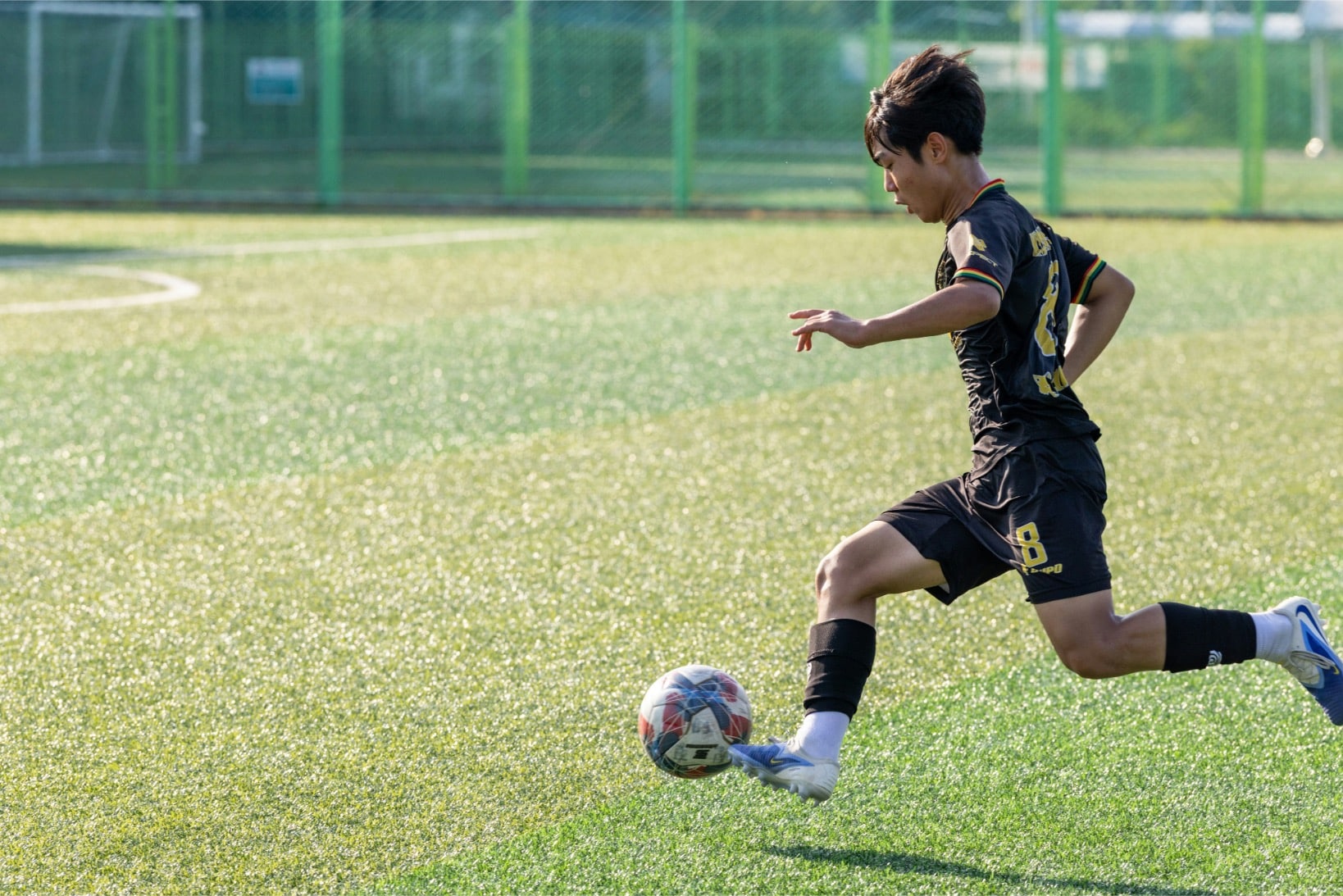
Youth sports have never been more serious than they are right now. Kids are specializing earlier, training year-round, playing on travel teams that require the kind of commitment most adults would find exhausting. A twelve-year-old baseball pitcher might throw more innings in a calendar year than his dad did in high school. A ten-year-old gymnast might spend twenty hours a week in the gym. A fourteen-year-old soccer player might play in three different leagues simultaneously across a single spring.
The physical demands of all of this land on bodies that are still developing. And the developing body of a young athlete is not just a smaller version of an adult athlete’s body. It’s a body whose bones, discs, joints, and nervous system are all in active growth phases, which means the demands of competitive sport interact with developmental biology in ways that most sports parents have never fully thought through.
The spine takes the brunt of most of it. And for most young athletes, nobody is paying attention to the spine until something hurts badly enough to force a conversation.
By then, the pattern that produced the problem has usually been building for a long time.
The Developmental Reality Most Sports Parents Don’t Know
Here’s something that’s worth understanding before anything else: the spine of a growing child is not structurally complete. The vertebrae are still ossifying, the growth plates are still open, and the discs are still developing their full structural integrity. This continues through the mid-twenties for most people, with the most significant developmental activity happening through the teenage years.
What this means practically is that the loads, asymmetries, and cumulative stresses of youth sport are being absorbed by a structure that is simultaneously growing and adapting. The body is extraordinarily good at this. But it adapts in the direction of whatever forces are most consistently applied to it. A spine that absorbs thousands of repetitions of an asymmetrical movement pattern over the course of a developing childhood doesn’t just tolerate that asymmetry. It incorporates it.
The right-handed baseball pitcher who throws year-round develops muscular imbalances between the dominant and non-dominant sides of the thoracic spine. The gymnast who hyperextends through the lumbar spine in every skill develops a pattern of anterior pelvic tilt and lumbar compression that shows up in how she stands, how she walks, and eventually in how her lower back feels when she’s thirty. The swimmer whose dominant stroke arm creates rotational asymmetry through the cervical and thoracic spine carries that asymmetry into everything else her body does.
None of this is inevitable or irreversible. But it does accumulate silently, without symptoms, until the body reaches a threshold where the accumulated strain starts to produce something noticeable. For many young athletes, that threshold arrives not as a dramatic injury but as a gradual decline in performance, a nagging discomfort that never quite resolves, or a recurring injury in the same location that keeps coming back despite rest and rehab.
What Chiropractic Care Does for a Developing Athlete
The conversation around athletic performance and chiropractic care tends to get framed around pain relief, which is understandable but incomplete. Pain relief is part of what chiropractic care provides for young athletes. It’s not the most important part.
The more significant contributions sit in three areas: structural balance, nervous system optimization, and recovery efficiency.
Structural Balance
A well-aligned spine distributes the loads of sport symmetrically and efficiently. When there are areas of restriction, asymmetry, or misalignment, the body compensates around them in ways that shift load to structures that weren’t designed to carry it. This is how overuse injuries develop. The IT band problem in the runner, the rotator cuff strain in the pitcher, the stress fracture in the gymnast, these are rarely isolated tissue failures. They’re the endpoint of a compensation chain that started somewhere else in the body and worked its way to the structure that finally gave out.
Chiropractic care addresses the structural contributors to these compensation patterns before they complete their journey to injury. For young athletes who are training heavily, regular assessment and adjustment of the spine and pelvis is one of the most practical injury prevention tools available, precisely because it catches the asymmetries and restrictions that produce injuries before those injuries happen.
Nervous System Optimization
The nervous system coordinates every aspect of athletic output. Movement efficiency, reaction time, proprioception, the body’s sense of where it is in space, muscle recruitment patterns, recovery signaling, all of it runs through the nervous system. When the spine is well aligned and the nervous system is communicating efficiently, athletic performance reflects that. When there’s structural interference in the spine, the quality of that communication is reduced in ways that show up as decreased coordination, slower reaction time, and less efficient movement patterns.
For young athletes who are working hard to develop technical skill, the nervous system piece of chiropractic care is often what parents notice most clearly. Kids who receive regular chiropractic care during periods of intensive athletic development often show improvements in coordination and movement quality that coaches notice without knowing what’s driving them.
Recovery Efficiency
The parasympathetic nervous system is the body’s recovery system. It’s the mode in which tissue repair happens, inflammation resolves, and the adaptations from training are consolidated. When the nervous system is dysregulated and stuck in sympathetic overdrive, recovery is impaired. The athlete trains hard, the body can’t complete the recovery process efficiently, and the next training session starts from a depleted baseline rather than a restored one.
Chiropractic care, particularly the nervous system focused approach at Howell Chiropractic, supports parasympathetic activation and improves the body’s ability to shift into recovery mode after the demands of training and competition. For athletes who are training at high volume, this recovery efficiency piece can be the difference between a season where the athlete gets progressively stronger and a season where they gradually run down.
Insider Tip from Dr. Travis: “I played sports my whole life and I still do. I understand what it means to push your body and what it costs when the body isn’t recovering the way it should. The young athletes I see who get the most out of chiropractic care are the ones whose parents understand that this isn’t reactive care. They’re not waiting for an injury. They’re investing in the system that makes everything else possible.”
Sport-Specific Patterns Worth Knowing About
Different sports create different structural demands, and understanding which patterns are most common in your child’s sport helps frame why chiropractic care is worth considering proactively rather than reactively.
Baseball and softball pitchers develop significant rotational asymmetry through the thoracic spine and shoulder girdle. The throwing motion loads the dominant side repeatedly in a pattern the body was not designed to repeat thousands of times. Without regular attention to the structural balance of the thoracic spine and the cervical-thoracic junction, pitchers are building toward elbow and shoulder problems that will eventually interrupt or end their playing time.
Gymnasts and cheerleaders experience significant lumbar compression and hyperextension loading through skills that require the spine to go to its range of motion limits repeatedly. The lumbar spine in a competitive gymnast absorbs forces that are genuinely extraordinary, and the sacroiliac joint dysfunction, lumbar disc issues, and hip problems that show up in gymnasts later in their careers typically have roots in patterns that were established during the developmental years.
Soccer players deal with a combination of high-impact loading through the lower extremity and cervical spine loading from heading. The repetitive sprint-deceleration pattern of soccer creates sacroiliac and hip flexor patterns that affect lumbar spine mechanics, and the rotational demands of the sport create thoracic asymmetries similar to those seen in throwing athletes.
Swimmers develop thoracic asymmetry through dominant stroke patterns and can develop cervical spine loading issues through bilateral breathing patterns that favor one side. The shoulder overuse patterns in competitive swimmers are well documented, and they almost always have a thoracic and cervical spine component that contributes to the shoulder problem.
Wrestlers and contact sport athletes take on impact loading that affects the cervical and thoracic spine directly, and the cumulative effect of that loading across a season is worth monitoring and managing proactively.
In every case, the pattern builds gradually and silently. The athlete adapts, compensates, and performs until the compensation runs out. Regular chiropractic assessment gives the body a chance to reset the pattern before it reaches that endpoint.
Did You Know? A growing body of research supports chiropractic care as a component of athletic performance optimization. Studies have shown improvements in vertical jump performance, grip strength, and proprioceptive accuracy following chiropractic adjustments. For developing athletes whose nervous systems are still maturing, these neurological performance benefits may be even more pronounced than they are in adult athletes.
When to Start and How Often
The most common question sports parents ask is when to start bringing their young athlete in and how frequently they should come.
The honest answer is that earlier is better, not because there’s anything wrong with starting later, but because the structural patterns that create problems in competitive athletes begin during the developmental years, and catching them early means less time spent correcting what’s already accumulated.
For young athletes who are actively competing, a reasonable starting point is a thorough evaluation with nervous system scans to establish a baseline picture of where the spine is and where the patterns specific to their sport are already developing. From there, a care plan is built around the athlete’s sport, training volume, and competitive schedule.
During the competitive season, more frequent visits help the body manage the accumulated demands of training and competition. During the off-season, the focus shifts toward correcting any patterns that developed during the season and building a stronger structural baseline before the next one begins.
One thing worth saying directly: chiropractic care for young athletes doesn’t require an injury to justify it. Waiting until something hurts means waiting until the compensation pattern has already run its course. The families who build chiropractic care into their athlete’s regular routine the same way they build in practice time and strength training are the families whose kids stay healthier, recover faster, and perform more consistently across longer careers. That’s not a coincidence. It’s the compounding return on a system that was supported instead of ignored.
For families where multiple kids are in different sports, the scheduling flexibility at Howell Chiropractic makes it practical to bring everyone in without it becoming a part-time job. Routine visits are five to fifteen minutes, and the SKED app makes it easy to manage the family’s appointments online.
The Conversation Most Sports Parents Haven’t Had Yet
Most sports families spend significant time and money on coaching, equipment, training, and nutrition. These are all legitimate investments in athletic development. Chiropractic care is rarely part of that conversation, and it’s worth asking why.
Part of it is that chiropractic care is still associated primarily with injury response rather than performance optimization and injury prevention. Part of it is that the benefits of regular nervous system based care are cumulative and sometimes subtle in the short term, which makes them harder to attribute clearly than a new pair of cleats or a pitching lesson.
But the athletes who have the longest and most successful careers, at every level of sport, are the ones whose bodies were taken care of throughout their development, not just patched together after injuries. The spine is the structural foundation of every athletic movement and the housing for the nervous system that coordinates all of it. Taking care of it consistently during the years when it matters most is one of the most practical investments a sports family can make.
If your young athlete is training hard and nobody has looked at their spine from a structural and nervous system perspective, that conversation is worth having. The process at Howell Chiropractic starts with a complimentary virtual consultation where Dr. Travis can talk through your child’s sport, their training load, any patterns or complaints that have come up, and what a care plan would look like for their specific situation.
Book at howelldc.com or reach out by call or text anytime.
Howell Chiropractic serves families across the Quad Cities including Davenport, Bettendorf, Moline, and Rock Island. Dr. Travis Howell specializes in pediatric, prenatal, and family chiropractic care with a nervous system-based approach. To schedule your complimentary virtual consultation, visit howelldc.com.